
Talca · Modelo Pedagógico Multinivel Orientado a ObjetivosTalca · Objective-driven Multilevel Learning Model
Enseñamos el superpoder de aprender por sí mismos. We teach the superpower of learning on your own.
No partimos del contenido, partimos del objetivo. Cada estudiante lee, piensa, construye y demuestra su aprendizaje, y avanza cuando de verdad lo logra, no cuando lo dice el calendario. We do not start from content, we start from the goal. Every student reads, thinks, builds and demonstrates their learning, and moves forward when they truly master it, not when the calendar says so.
- Educación que empoderaEducation that empowers
- Jóvenes que resuelvenYoung people who solve
- Hijos preparados para el éxitoChildren ready to succeed
Fortalezas de nuestra práctica que explicamos para que se comprendan.Strengths of our practice that we explain so they are understood.
Tres fortalezas de nuestro modelo, explicadas sin tecnicismos.Three strengths of our model, explained without jargon.
Es natural que surjan preguntas frente a prácticas que no son habituales en otros colegios. No son rutinas para llenar el cuaderno ni exigencias sin propósito: cada pilar responde a cómo aprende de verdad el cerebro humano y a las habilidades que la vida y el mundo actual exigen.It is natural for questions to arise about practices that are uncommon in other schools. These are not routines to fill a notebook or demands without purpose: each pillar responds to how the human brain truly learns and to the skills that life and today's world demand.
Los tres son complementarios: aprender leyendo y tomar apuntes enseña a pensar; la estructura evaluativa acompaña el aprendizaje en distintos plazos de la memoria; y el clima de aula crea las condiciones para que todo lo anterior ocurra.The three are complementary: learning by reading and taking notes teaches how to think; the assessment structure supports learning across the different terms of memory; and the classroom climate creates the conditions for all of the above to happen.
Los tres pilares viven en el aula. En torno a ellos, el modelo escala con una progresión de autonomía y complejidad, y se sostiene en dos capas más allá del aula: la comunidad y la tecnología.The three pillars live in the classroom. Around them, the model scales through a progression of autonomy and complexity, and rests on two further layers beyond the classroom: community and technology.
Aprender leyendo y tomar apuntesLearning by reading and taking notes
Convierte la lectura en pensamiento, no en subrayado. Enseña a pensar.Turns reading into thinking, not highlighting. It teaches how to think.
Ver el pilarSee the pillar → Pilar 2Pillar 2Evaluación en tres ritmosAssessment in three rhythms
Acompaña la memoria en todos sus plazos: el presente, el día y el largo plazo.Supports memory across every term: the present, the day and the long run.
Ver el pilarSee the pillar → Pilar 3Pillar 3El clima de aulaThe classroom climate
Crea las condiciones para pensar: el silencio como condición, no como imposición.Creates the conditions to think: silence as a condition, not an imposition.
Ver el pilarSee the pillar →Lo que significan los tres pilares para tu hijo o hija, desde el primer día.What the three pillars mean for your child, from day one.
Un modelo que se adapta a la potencialidad de cada estudiante, sin excepción.A model that adapts to each student's potential, without exception.
Avanza por logroAdvance by mastery
Cada estudiante avanza al habilitarse por logro efectivo, no arrastrado por el ritmo del grupo. Nadie queda atrás y nadie se aburre esperando.Each student advances once they truly master a level, not dragged by the group's pace. No one is left behind and no one waits, bored.
A su alturaAt their level
Inicial, intermedio y avanzado conviven y se diferencian por el grado de abstracción. Al que necesita más apoyo se le sostiene; al que puede llegar más lejos se le estira.Beginning, intermediate and advanced coexist, differentiated by depth. Those who need support are held; those who can go further are stretched.
El bienestar es un objetivoWellbeing is a goal
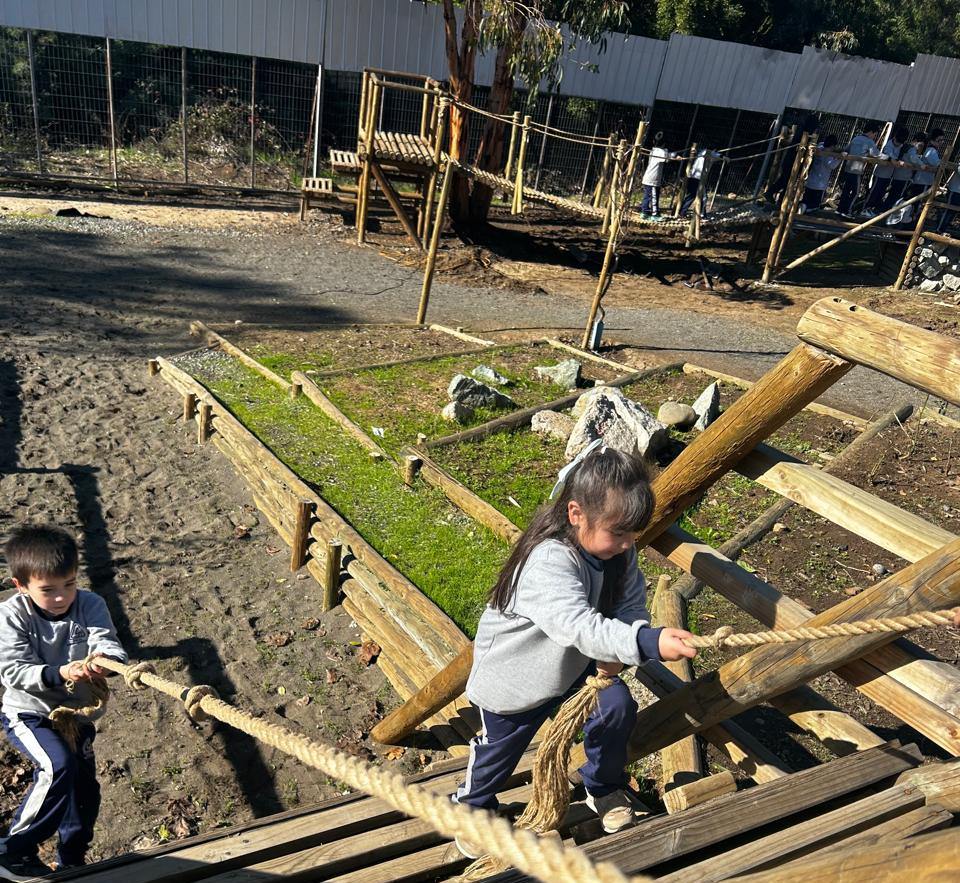
Franjas según la curva de energía, educación física diaria en contacto con la naturaleza y evaluación como mediación, no como veredicto.Schedules that follow the energy curve, daily physical education in nature, and assessment as mediation, not verdict.
El set de aprendizaje es la unidad operativa. Siempre sigue la misma secuencia.The learning set is the operating unit. It always follows the same sequence.
Leer · Anotar · Construir · MostrarRead · Note · Build · Show
El aprendizaje empieza por el objetivo, no por el contenido.Learning starts from the goal, not from the content.
Antes de aprender se plantea la meta, y desde ella se diseña hacia atrás el camino. Cada objetivo da origen a un set de aprendizaje que arranca leyendo.Before learning, the goal is stated, and the path is designed backward from it. Each goal gives rise to a learning set that begins by reading.
Aprender leyendoLearn by reading
Una lectura inicial de 3 a 6 carillas. Leer aquí es lectura activa, con un método que se enseña de forma explícita.An initial reading of 3 to 6 pages. Reading here is active reading, with a method taught explicitly.
Apunte CornellCornell notes
El primer producto, individual: un apunte estructurado con código de color. La evidencia de que el niño leyó pensando.The first, individual product: a structured note with color codes. Evidence that the child read while thinking.
Producto de consolidaciónConsolidation product
El grupo lee primero las conductas observables de la rúbrica y recién entonces decide qué construir: prototipo, maqueta, afiche o algo nuevo.The group first reads the rubric's observable behaviors, and only then decides what to build: a prototype, model, poster or something new.
Muestra semanalWeekly showcase
De los cuatro productos de la semana se sortea al azar cuál presenta cada grupo. El azar obliga a que los cuatro estén bien resueltos.Of the four products of the week, chance decides which each group presents. Randomness forces all four to be well resolved.
Día temático y franjas de energíaThemed day and energy bands
Cada jornada tiene una asignatura protagonista y las demás articulan hacia ella. Las primeras horas, de mayor concentración, van al trabajo individual; luego, al trabajo colaborativo.Each day has a lead subject and the others articulate toward it. The early, high-focus hours go to individual work; then, to collaborative work.
El grupo se diseña, no se forma soloThe group is designed, not left to chance
Los grupos se arman por complementariedad real, con roles definidos, y se monitorean y actualizan cuando hace falta. No son pupitres cercanos ni azar.Groups are built for real complementarity, with defined roles, monitored and updated when needed. Not nearby desks, not chance.
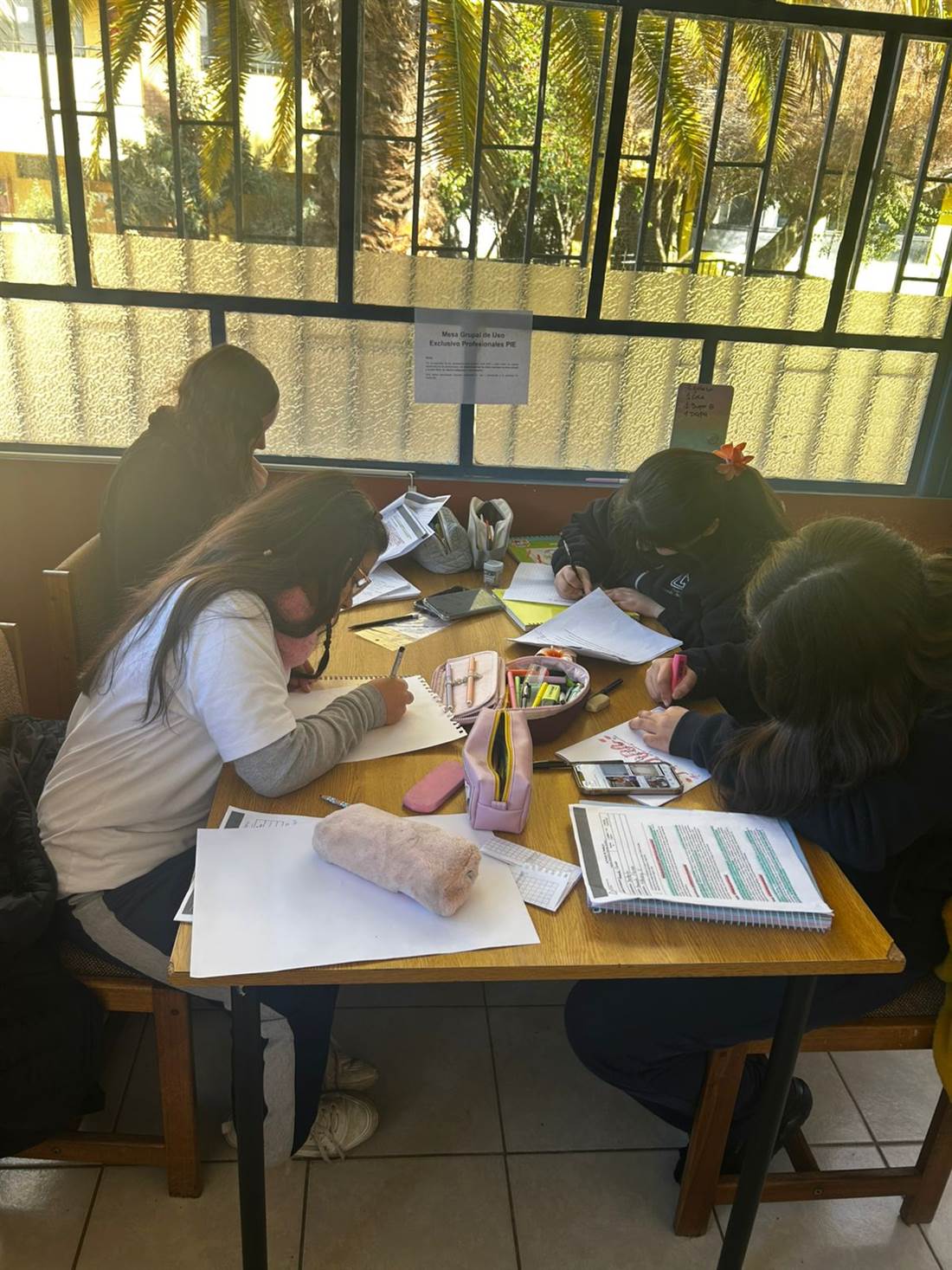
Por qué el docente media en lugar de exponer, y para qué sirve en la vida.Why the teacher mediates instead of lecturing, and how it serves life.
No explicamos el contenido: mediamos para que el estudiante lo construya.We do not explain the content: we mediate so the student builds it.
Exponer transmite información a un receptor pasivo y, en el mejor caso, deja a un estudiante informado. Mediar organiza las condiciones para que el estudiante construya la comprensión por sí mismo, y deja a alguien que aprende a aprender.Lecturing transmits information to a passive receiver and, at best, leaves an informed student. Mediating arranges the conditions for the student to build understanding, and leaves someone who learns how to learn.
La razón es empírica: no aprendemos de forma duradera por recibir información, sino por hacer algo con ella. Mediar no es lo cómodo, es lo difícil: exige leer a cada estudiante en tiempo real y formular la pregunta justa. Es la forma más individualizada y exigente de enseñar.The reason is empirical: we do not learn durably by receiving information, but by doing something with it. Mediating is not the easy path, it is the hard one: it requires reading each student in real time and asking the right question. It is the most individualized and demanding way to teach.
Nuestra labor es elevar al estudiante hacia el desafío, no bajar el desafío hacia el estudiante.Our task is to raise the student toward the challenge, not to lower the challenge toward the student.
Y cuando un estudiante aún no puede enfrentar solo el texto completo, no se le baja la meta: se le ofrece un andamiaje, la Lectura de Aproximación, que lo acompaña y se retira a medida que crece su autonomía.And when a student cannot yet face the full text alone, we do not lower the goal: we offer a scaffold, the Approach Reading, that supports them and is withdrawn as their autonomy grows.
Una habilidad para la vida y para dialogar con la IAA skill for life and for talking with AI
Las estructuras de comprensión que se entrenan al tomar apuntes se activan también fuera del aula. Quien identifica rápido de qué se habla y cuáles son las ideas centrales comprende mejor y participa con confianza: puede proponer, rebatir y dialogar con seguridad.The comprehension structures trained by taking notes also activate outside the classroom. Whoever quickly grasps what is being discussed and what the core ideas are understands better and takes part with confidence: they can propose, rebut and engage with assurance.
Y cobran un valor nuevo frente a la inteligencia artificial: interactuar bien con una IA depende de comprender lo que responde, distinguir ideas fuerza y estructuras, para formular mejores preguntas e ir iterando hasta el resultado buscado. La misma destreza que ordena un apunte permite conversar de manera productiva con una IA.And they take on new value in the face of artificial intelligence: interacting well with an AI depends on understanding its answers, telling apart key ideas and structures, in order to ask better questions and iterate toward the desired result. The same skill that orders a note lets you hold a productive conversation with an AI.
Tres ritmos, todos al servicio del aprendizaje. No para poner notas, para acompañar.Three rhythms, all serving learning. Not to hand out grades, but to accompany.
Evaluamos en tres ritmos: el presente, el cierre del día y el largo plazo.We assess in three rhythms: the present, the day's close and the long term.
Mientras trabajan, el profesor media y registra el desarrollo en marcha. Es evaluación como mediación pedagógica, no como veredicto.While they work, the teacher mediates and records progress underway. It is assessment as pedagogical mediation, not verdict.
La mirada objetiva del día. Quien lo resuelve queda habilitado para avanzar; reprobarlo da acceso de inmediato a reforzamiento y a un re-ticket. Ninguna duda se arrastra.The day's objective check. Whoever passes is cleared to advance; not passing gives immediate access to reinforcement and a re-ticket. No doubt is carried over.
Cada cuatro semanas, el estudiante reúne sus lecturas anotadas, apuntes y productos, y estudia con ese material propio. Instala recuerdo espaciado y da valor de uso a todo lo producido.Every four weeks, the student gathers annotated readings, notes and products, and studies with their own material. It builds spaced recall and gives real use to everything produced.
La clave: la memoria como una redThe key: memory as a network
La memoria de largo plazo funciona como una red: mientras más nodos, más conocimientos consolidados tiene, más fácil resulta enganchar y absorber saberes nuevos, porque siempre comprendemos lo nuevo a partir de lo que ya sabemos. Si lo aprendido no se transfiere al largo plazo, ese saber no se desarrolla y limita todo lo que viene después. Por eso el certamen no busca una nota: busca consolidar para toda la vida.Long-term memory works like a network: the more nodes, the more consolidated knowledge it holds, the easier it is to hook and absorb new learning, because we always understand the new through what we already know. If what is learned does not transfer to the long term, that knowledge does not develop and limits everything that follows. That is why the synthesis exam does not seek a grade: it seeks to consolidate for life.
Y conviene despejar un temor frecuente: el ticket no castiga. Quien no lo resuelve accede de inmediato a reforzamiento y a un re-ticket para mejorar. Así el estudiante aprende a concentrarse y a sentirse capaz de completar una jornada de trabajo, una destreza para toda la vida.And it is worth dispelling a common fear: the exit ticket does not punish. Whoever does not pass it gains immediate access to reinforcement and a re-ticket to improve. This way the student learns to focus and to feel capable of completing a day's work, a skill for life.
Las condiciones para aprender. El pilar más valorado por los propios estudiantes.The conditions for learning. The pillar students value most.
El silencio no es imposición: es condición para pensar.Silence is not an imposition: it is a condition for thinking.
Aprender a fondo requiere un ambiente que lo permita y una cultura que lo sostenga. Bajo "Mi Cultura, Mi Salón" el aula es el lugar de pertenencia de cada estudiante, y la autorregulación se aprende como una habilidad más.Deep learning requires an environment that allows it and a culture that sustains it. Under "My Culture, My Classroom" the classroom is each student's place of belonging, and self-regulation is learned as one more skill.
“Mi Cultura, Mi Salón”“My Culture, My Classroom”
Un ambiente autogestionado donde los propios estudiantes cuidan su espacio, desarrollando responsabilidad, respeto y sentido de pertenencia. Más que disciplina impuesta, es una cultura inclusiva: cada estudiante pertenece a su salón y el apoyo se da dentro del aula común, sin segregar.A self-managed environment where the students themselves care for their space, building responsibility, respect and belonging. More than imposed discipline, it is an inclusive culture: each student belongs to their classroom and support happens within the common classroom, without segregating.
El aula coworkThe cowork classroom
Un espacio de aprendizaje colaborativo autorregulado: un marco de libertad con silencio para gestionar el propio foco mientras se trabaja en equipo. No es un privilegio, es un nivel alcanzable: la cima de una escalera de autonomía graduada que cualquier curso puede subir liderando su propia transformación.A self-regulated collaborative learning space: a framework of freedom with silence to manage one's own focus while working as a team. It is not a privilege, it is an attainable level: the top of a graduated-autonomy ladder that any class can climb by leading its own transformation.
El apoyo se organiza en torno al estudiante, no a un lugar fijoSupport is organized around the student, not a fixed place
El aula común es la norma. Cuando un momento lo requiere, contamos con una diversidad de espacios complementarios que elegimos según lo que cada estudiante necesita, siempre orientados a reincorporarse a su grupo.The common classroom is the norm. When a moment calls for it, we have a diversity of complementary spaces that we choose according to each student's need, always aimed at rejoining their group.
El lugar de pertenencia y aprendizaje de todos, donde el apoyo ocurre como norma sin sacar al estudiante de su grupo.Everyone's place of belonging and learning, where support happens as the norm without removing the student from their group.
Apoyo intensivo y transitorio para recomponer la trayectoria, siempre orientado a volver al grupo.Intensive, transitory support to rebuild a learning path, always aimed at returning to the group.
Una intervención breve de regulación para retomar la calma antes de reintegrarse a la actividad.A brief regulation moment to recover calm before rejoining the activity.
Entornos que favorecen la concentración, la calma y la autorregulación, cuando las condiciones del clima acompañan.Environments that favor focus, calm and self-regulation, when weather conditions allow.
Así, el clima de aula no es una regla externa: es una cultura de pertenencia, inclusión y autorregulación donde son los estudiantes quienes se hacen cargo de su propio ambiente de aprendizaje. Es, otra vez, una educación que empodera.In this way, the classroom climate is not an external rule: it is a culture of belonging, inclusion and self-regulation where the students take charge of their own learning environment. It is, once again, an education that empowers.
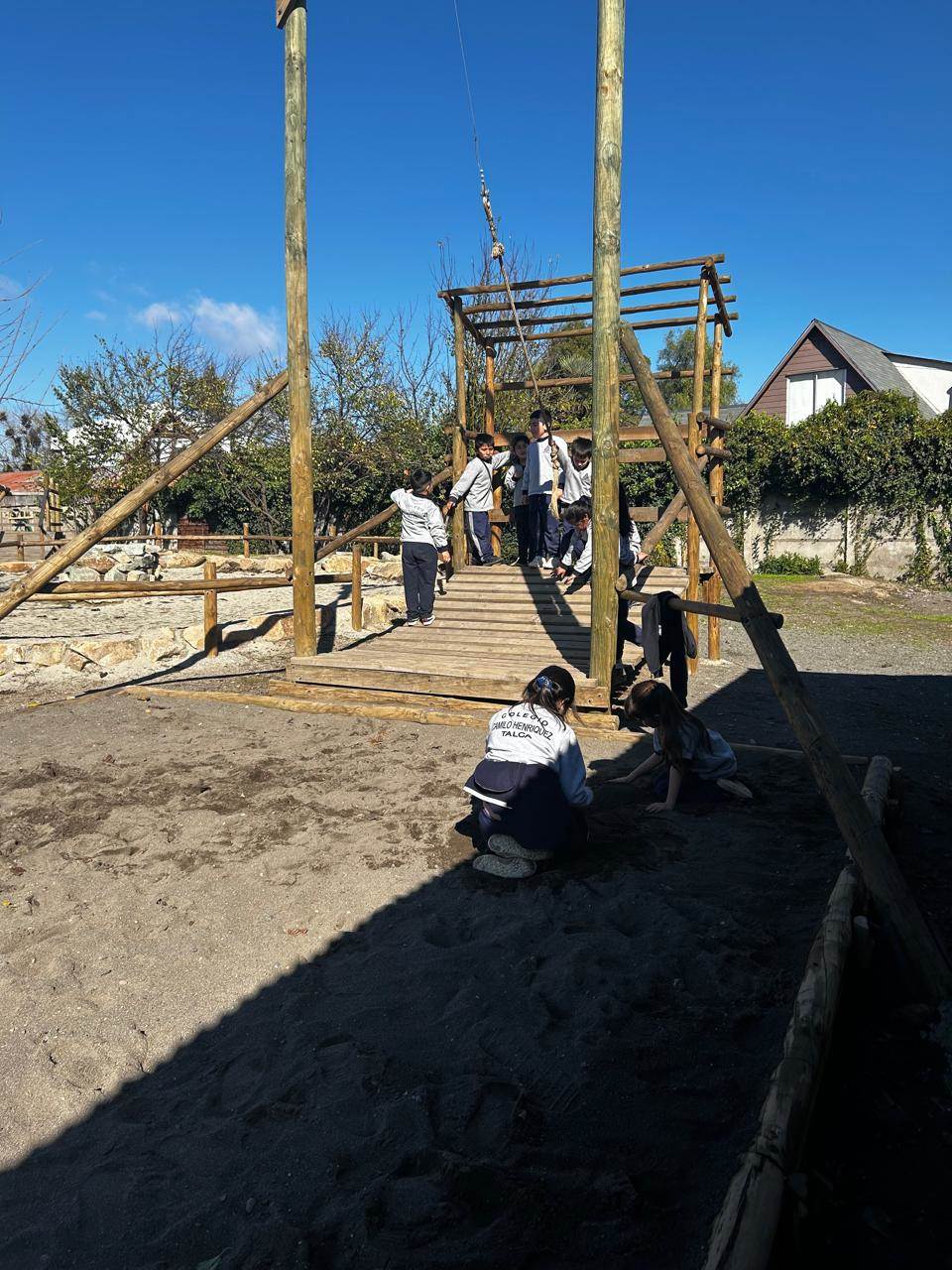
Una escalera que cada estudiante sube a su ritmo, desde donde está hacia donde puede llegar.A ladder each student climbs at their own pace, from where they are toward where they can reach.
Subimos la exigencia a medida que crece la autonomía.We raise the challenge as autonomy grows.
No es un modelo de talla única. La complejidad y la autonomía se gestionan en progresión, con múltiples espacios y esquemas de mediación, para sostener a quien necesita más apoyo y estirar a quien puede llegar más lejos.This is not a one-size-fits-all model. Complexity and autonomy are managed in progression, with multiple spaces and mediation schemes, to support those who need more help and stretch those who can go further.
Material versionado por complejidadMaterial versioned by complexity
Cada set de aprendizaje se elabora según el nivel de profundización. Inicial, intermedio y avanzado comparten la misma estructura, cada uno a su altura cognitiva.Each learning set is built according to its depth. Beginning, intermediate and advanced share the same structure, each at its cognitive level.
Aula con autonomía mediadaClassroom with mediated autonomy
El docente media de cerca. Los estudiantes trabajan de forma individual y colaborativa, con autonomía guiada y apoyos que se ajustan sobre la marcha.The teacher mediates closely. Students work individually and collaboratively, with guided autonomy and support adjusted on the go.
Cowork: autorregulación de alto desempeñoCowork: high-performance self-regulation
La cima: un espacio altamente desafiante para estudiantes de alto desempeño con fuerte autorregulación, donde aprenden a distribuir sus tiempos, pausas y foco, entre el trabajo académico y el creativo.The summit: a highly challenging space for high-performing students with strong self-regulation, where they learn to manage their time, breaks and focus, between academic and creative work.
La cima de la escaleraThe top of the ladderEsta multiplicidad de espacios, esquemas de mediación y complejidad progresiva produce empoderamiento y movilización: el estudiante se involucra personalmente en su aprendizaje. Y está comprobado que las capacidades que se adquieren en esta etapa de la vida generan grandes efectos en el desarrollo futuro de la persona.This multiplicity of spaces, mediation schemes and progressive complexity produces empowerment and mobilization: the student becomes personally involved in their learning. And it is well established that the capacities acquired at this stage of life have great effects on a person's future development.
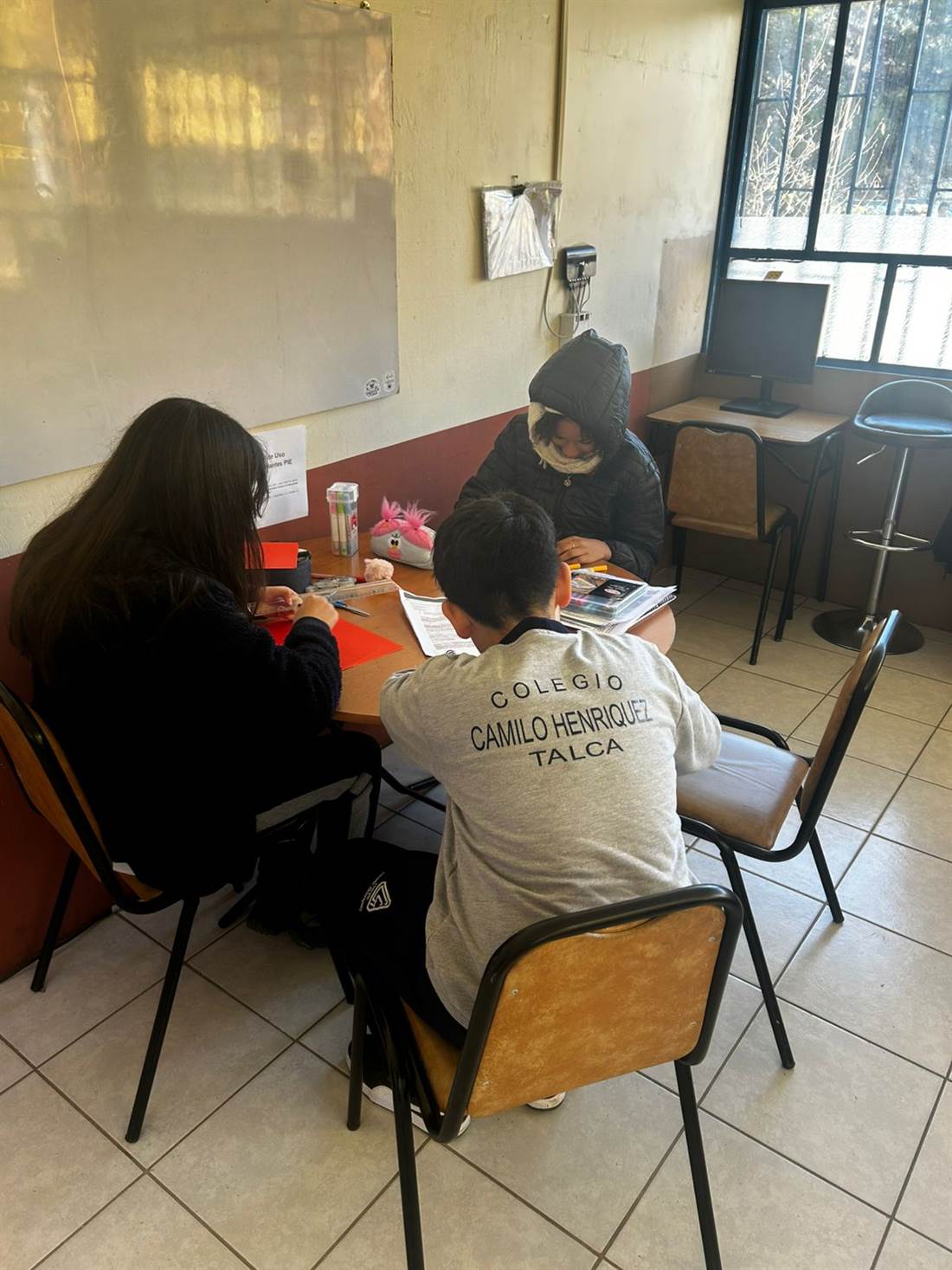
El mismo método que usamos con los estudiantes, aplicado a los adultos.The same method we use with students, applied to adults.
Una comunidad que problematiza la realidad y construye soluciones juntos.A community that problematizes reality and builds solutions together.
Primero se problematiza, es decir, se hace visible que algo es mejorable, y recién entonces se abre el espacio para que todos aporten hasta converger en soluciones. Es el mismo movimiento crítico que viven los niños, aplicado a la vida institucional.First we problematize, we make visible that something can be improved, and only then does the space open for everyone to contribute until we converge on solutions. It is the same critical movement the children live, applied to institutional life.
ApoderadosFamilies
Plenarias mensuales con el equipo directivo, donde plantean sus posiciones y reciben los valores de la escuela sin intermediarios.Monthly plenaries with school leadership, where they voice their positions and receive the school's values directly.
DocentesTeachers
Desafíos pedagógicos abiertos a debate, con líderes temáticos del propio cuerpo docente. Cada profesor formula soluciones y también propone nuevos problemas.Pedagogical challenges open to debate, with topic leaders from the teaching staff itself. Each teacher shapes solutions and also proposes new problems.
EstudiantesStudents
Ya contamos con intervenciones de alto valor nacidas de los propios estudiantes. La meta: que alumnos, docentes y familias formulen y resuelvan juntos los desafíos de aprendizaje.We already have high-value interventions born from students themselves. The goal: students, teachers and families formulating and solving learning challenges together.
Y lo vemos en nuestros estudiantes: son propositivos. Despliegan capacidad creativa, investigativa, organizativa y argumentativa, y son capaces de ejecutar lo que se proponen.And we see it in our students: they are proactive. They deploy creative, investigative, organizational and argumentative capacity, and are able to execute what they set out to do.
Un grupo de octavo básico observó su experiencia escolar, no normalizó lo que les parecía mejorable: lo problematizó y propuso alternativas. Eso es, precisamente, el movimiento que buscamos instalar.A group of eighth graders observed their school experience and did not normalize what could be improved: they problematized it and proposed alternatives. That is exactly the movement we seek to instill.Sobre la propuesta estudiantil, 8° año básicoOn the student proposal, 8th grade
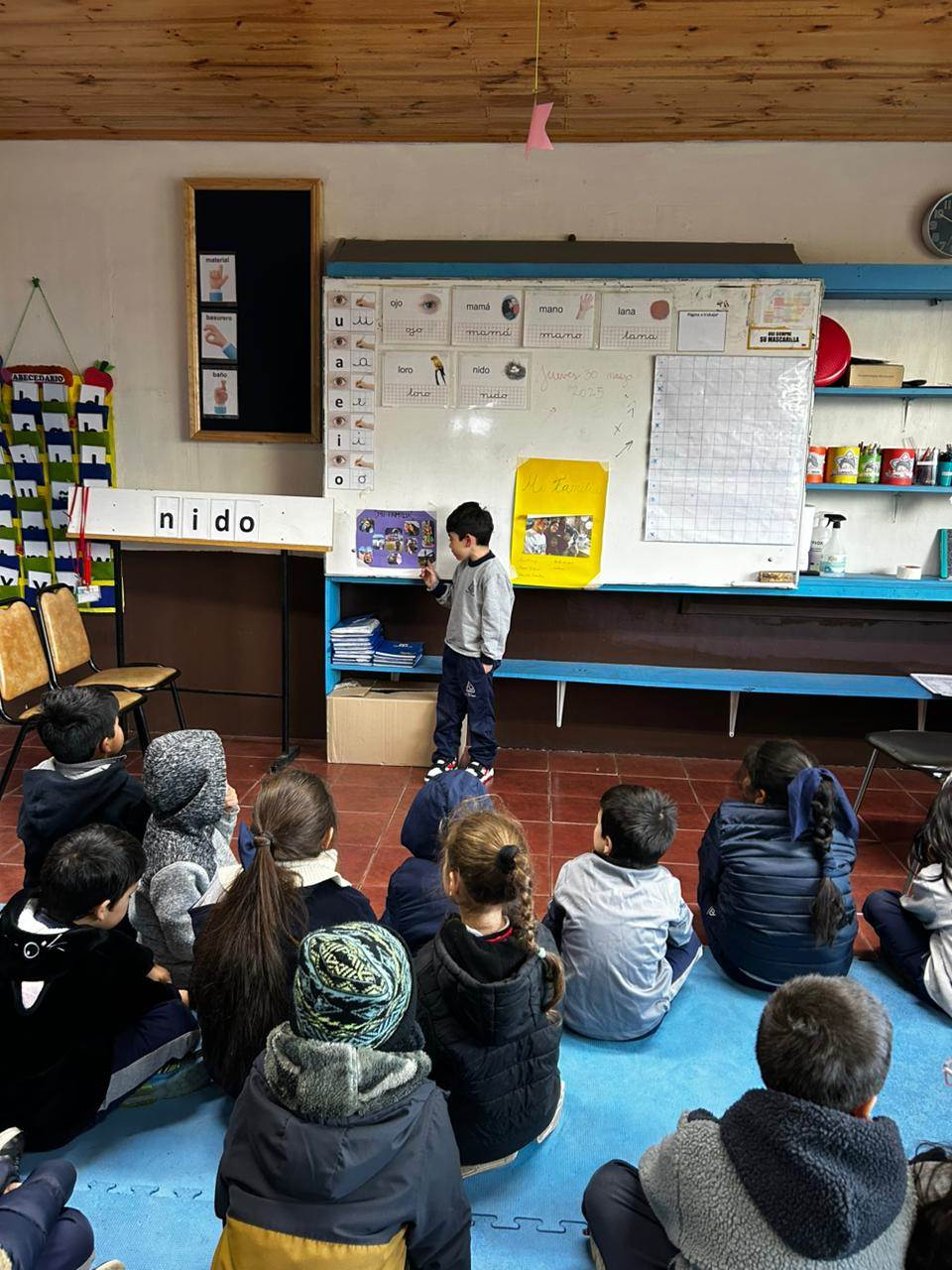
Lo que hace humanamente viable el modelo.What makes the model humanly viable.
La IA propone, el docente dispone.AI proposes, the teacher decides.
Un sistema multiagente de IA orquesta buena parte de la operación. El orden de los factores importa: el sistema no reemplaza la decisión pedagógica, la ejecuta una vez tomada.A multi-agent AI system orchestrates much of the operation. Order matters: the system does not replace the pedagogical decision, it executes it once made.
Desde el objetivo, en cadenaFrom the goal, in a chain
A partir de los objetivos de la semana, el sistema diseña los textos de aprender leyendo, genera los productos por subnivel y elabora los tickets de salida.From the week's goals, the system designs the reading texts, generates products by sublevel and produces the exit tickets.
El docente como verificadorThe teacher as verifier
Frente al material generado, el profesor valida o devuelve a corrección. La automatización baja la carga administrativa para que el docente se concentre en mediar, evaluar y sostener el vínculo.Facing the generated material, the teacher validates or returns it for correction. Automation lowers the administrative load so the teacher can focus on mediating, assessing and sustaining relationships.
Por qué enseñar a aprender importa hoy más que nunca.Why teaching how to learn matters more than ever.
El mundo cambió: enseñar a ejecutar ya no alcanza.The world changed: teaching to execute is no longer enough.
Cuando la inteligencia artificial ejecuta lo conocido a bajo costo, lo escaso pasa a ser pensar, problematizar y aprender por cuenta propia. Formar esas capacidades no es un lujo: es urgente.When artificial intelligence executes the known at low cost, what becomes scarce is thinking, problematizing and learning on one's own. Forming those capacities is not a luxury: it is urgent.
Durante más de un siglo, la escuela separó el pensar del hacer, heredando una lógica industrial. Nuestro modelo los vuelve a unir: el estudiante lee, piensa, decide y construye. No formamos ejecutores de respuestas conocidas, sino personas capaces de redefinir la pregunta.For over a century, schooling separated thinking from doing, inheriting an industrial logic. Our model reunites them: the student reads, thinks, decides and builds. We do not form executors of known answers, but people able to redefine the question.
No es una apuesta aislada. Una investigación educativa creciente y un movimiento global de escuelas, universidades y programas ya forman personas así, con aprendizaje autodirigido, por proyectos y orientado a problemas reales. Nuestro modelo es una expresión concreta y local de esa evidencia, a través de los tres pilares.This is not an isolated bet. A growing body of educational research and a global movement of schools, universities and programs already form people this way, through self-directed, project- and problem-based learning. Our model is a concrete, local expression of that evidence, through the three pillars.
- 39%
- de las competencias laborales cambiarán hacia 2030 (Foro Económico Mundial).of core work skills will change by 2030 (World Economic Forum).
- 1911
- el año en que la industria separó el pensar del hacer; la escuela lo heredó y nuestro modelo lo revierte.the year industry split thinking from doing; schooling inherited it, and our model reverses it.
- 4
- familias de capacidades para el futuro: pensar, relacionarse, autoliderarse y orientarse.families of future capacities: thinking, relating, self-leading and orienting.
Por eso enseñamos el superpoder de aprender por sí mismos: es la mejor preparación para un mundo que cambia más rápido de lo que cualquier contenido puede seguir.That is why we teach the superpower of learning on your own: it is the best preparation for a world that changes faster than any content can keep up with.
Cada decisión responde a la vez a un marco normativo y a constructos pedagógicos consolidados.Each decision answers both a legal framework and consolidated pedagogical constructs.
No son preferencias internas: son opciones doblemente fundadas.These are not internal preferences: they are doubly grounded choices.
Respaldo normativo (Chile)Legal framework (Chile)
Prioridad del aprendizaje, deber de enseñar sin imponer un método único, adecuaciones curriculares y evaluación formativa al servicio del aprendizaje.Priority of learning, the duty to teach without imposing a single method, curricular adjustments, and formative assessment serving learning.
Respaldo pedagógicoPedagogical grounding
Educación problematizadora, zona de desarrollo próximo, aprendizaje mediado, recuperación activa, dificultades deseables, aprendizaje generativo, autorregulación y autodeterminación.Problem-posing education, zone of proximal development, mediated learning, active retrieval, desirable difficulties, generative learning, self-regulation and self-determination.
El aula frontal tradicional frente a nuestro modelo, dimensión por dimensión.The traditional lecture classroom versus our model, dimension by dimension.
Del receptor pasivo al protagonista de su aprendizaje.From passive receiver to protagonist of their learning.
| DimensiónDimension | Aula frontal tradicionalTraditional lecture | Nuestro modeloOur model |
|---|---|---|
| Rol del estudianteStudent role | Pasivo, receptor de contenidoPassive, receiver of content | Protagonista: construye y demuestra su aprendizajeProtagonist: builds and demonstrates learning |
| Rol del profesorTeacher role | Transmite y exponeTransmits and lectures | Media las reflexiones del propio estudianteMediates the student's own reflection |
| AgrupaciónGrouping | Curso homogéneo por edadHomogeneous class by age | Grupos multinivel diseñados por complementariedadDesigned multilevel groups by complementarity |
| EvaluaciónAssessment | Una prueba sumativa al finalA single summative test at the end | Tres ritmos: proceso, ticket diario y síntesisThree rhythms: process, daily ticket and synthesis |
| ProgresiónProgression | El grupo avanza al ritmo del calendarioThe group advances by calendar | Cada uno avanza al habilitarse por logroEach advances once mastery is reached |
| Resultado buscadoIntended outcome | Cobertura de contenidosContent coverage | Pensamiento superior, autonomía y autoeficaciaHigher-order thinking, autonomy and self-efficacy |
El bienestar no se contrapesa, se atiende.Wellbeing is not weighed against, it is attended to.
Cuando la experiencia vivida no coincide con la intención del diseño, la brecha es justamente lo que revisamos: la carga y los tiempos reales. Es un derecho de los estudiantes y un deber de cuidado de la escuela, y lo abordamos de forma directa, temprana y con las familias incluidas.When lived experience does not match the design's intent, the gap is exactly what we review: the real load and timing. It is a student right and a school duty of care, and we address it directly, early, and with families included.
Tres pilares que convergen en tres promesas.Three pillars that converge into three promises.
Un modelo coherente, no prácticas aisladas.A coherent model, not isolated practices.
Aprender leyendo entrena la mente para comprender y pensar; la evaluación en tres ritmos acompaña la memoria en todos sus plazos; y el clima de aula ofrece el ambiente para que ese aprendizaje florezca. Los tres convergen en las tres promesas que dan sentido a nuestro proyecto.Learning by reading trains the mind to understand and think; assessment in three rhythms supports memory across every term; and the classroom climate offers the environment for that learning to flourish. The three converge into the three promises that give meaning to our project.
Educación que empoderaEducation that empowers
Formamos estudiantes capaces de aprender por sí mismos.We form students capable of learning on their own.
Jóvenes que resuelvenYoung people who solve
Enfrentan problemas reales con creatividad, colaboración y pensamiento propio.They face real problems with creativity, collaboration and independent thinking.
Hijos preparados para el éxitoChildren ready to succeed
Desarrollan desde temprano las destrezas que la vida y el mundo actual exigen.They develop early the skills that life and today's world demand.
El beneficio no se agota en una prueba ni en un cuaderno: se trata de habilitar a nuestros estudiantes para la vida, para leer, comprender, argumentar, concentrarse, autorregularse y seguir aprendiendo por su cuenta, incluso en un mundo que cambia tan rápido como el actual.The benefit is not exhausted in a test or a notebook: it is about enabling our students for life, to read, understand, argue, focus, self-regulate and keep learning on their own, even in a world that changes as fast as today's.
Las inquietudes más habituales sobre prácticas que no son comunes en otros colegios.The most common concerns about practices that are uncommon in other schools.
Lo que las familias suelen preguntar.What families usually ask.
¿Por qué el profesor media en lugar de explicar la materia?Why does the teacher mediate instead of explaining the content?
Porque no aprendemos de forma duradera por recibir información, sino por hacer algo con ella. Exponer deja a un estudiante informado; mediar deja a alguien que aprende a aprender. No es ausencia de enseñanza: es la forma más exigente de enseñar, porque el docente lee a cada estudiante en tiempo real y formula la pregunta justa.Because we do not learn durably by receiving information, but by doing something with it. Lecturing leaves an informed student; mediating leaves someone who learns how to learn. It is not an absence of teaching: it is the most demanding way to teach, because the teacher reads each student in real time and asks the right question.
¿Y si mi hijo o hija todavía no puede leer solo el texto completo?What if my child cannot yet read the full text alone?
No se le baja la meta: se le ofrece un andamiaje, la Lectura de Aproximación, que lo acompaña y se retira a medida que crece su autonomía. Nuestra labor es elevar al estudiante hacia el desafío, no bajar el desafío hacia el estudiante.We do not lower the goal: we offer a scaffold, the Approach Reading, that supports them and is withdrawn as their autonomy grows. Our task is to raise the student toward the challenge, not to lower the challenge toward the student.
¿No se atrasa si cada estudiante avanza a su propio ritmo?Doesn't a student fall behind if everyone advances at their own pace?
Avanzar por logro no es ir más lento: es no arrastrar dudas. Quien resuelve el ticket de salida queda habilitado para avanzar; quien lo necesita accede de inmediato a reforzamiento. Nadie queda atrás y nadie se aburre esperando al grupo.Advancing by mastery is not going slower: it is not carrying doubts forward. Whoever passes the exit ticket is cleared to advance; whoever needs it gets immediate reinforcement. No one is left behind and no one waits, bored, for the group.
¿El ticket de salida es una prueba que castiga?Is the exit ticket a test that punishes?
No. Es el cierre del día para detectar a tiempo quién necesita apoyo. Reprobarlo da acceso inmediato a reforzamiento y a un re-ticket para mejorar la nota. Su función es diagnóstica, no punitiva.No. It is the day's close, meant to detect early who needs support. Not passing it gives immediate access to reinforcement and a re-ticket to improve the grade. Its function is diagnostic, not punitive.
¿El cowork es un privilegio para algunos estudiantes?Is the cowork a privilege for some students?
No es un privilegio, es un nivel alcanzable. Es la cima de una escalera de autonomía graduada que cualquier curso puede subir liderando su propia transformación. El acceso depende de la autorregulación, no de un premio.It is not a privilege, it is an attainable level. It is the top of a graduated-autonomy ladder that any class can climb by leading its own transformation. Access depends on self-regulation, not on a reward.
¿Cómo cuidan el bienestar y la carga de trabajo?How do you look after wellbeing and workload?
El bienestar es un objetivo declarado del modelo, no un efecto colateral. Cuando la experiencia vivida no coincide con la intención del diseño, revisamos la carga y los tiempos reales, de forma directa, temprana y con las familias incluidas.Wellbeing is a declared goal of the model, not a side effect. When lived experience does not match the design's intent, we review the real load and timing, directly, early, and with families included.
¿Cómo apoyan a un estudiante que necesita más ayuda?How do you support a student who needs more help?
Bajo "Mi Cultura, Mi Salón", el apoyo se organiza en torno al estudiante, no a un lugar fijo: dentro del aula común como norma, sin segregar, y con una diversidad de espacios complementarios cuando un momento lo requiere. Al que necesita más apoyo se le sostiene; al que puede llegar más lejos se le estira.Under "My Culture, My Classroom", support is organized around the student, not a fixed place: within the common classroom as the norm, without segregating, and with a diversity of complementary spaces when a moment calls for it. Those who need more support are held; those who can go further are stretched.
¿La inteligencia artificial reemplaza al docente?Does artificial intelligence replace the teacher?
No. La IA propone, el docente dispone. El sistema baja la carga administrativa para que el profesor se concentre en lo que solo un humano hace: definir objetivos, mediar, evaluar y sostener el vínculo. El docente es el verificador: valida el material o lo devuelve a corrección.No. AI proposes, the teacher decides. The system lowers the administrative load so the teacher can focus on what only a human does: setting goals, mediating, assessing and sustaining relationships. The teacher is the verifier: they validate the material or send it back for correction.
Comunicación directa, sin intermediarios.Direct communication, no intermediaries.
Habla directamente con quienes lideran el colegio.Talk directly with those who lead the school.
Para comunicarse con cualquier integrante de nuestro equipo, le invitamos a llamar o escribir directamente.To reach any member of our team, we invite you to call or write directly.
AdmisiónAdmissions
Conversemos sobre el aprendizaje de tu hijo o hija.Let's talk about your child's learning.
Te invitamos a conocer el colegio, ver el modelo en marcha y resolver tus dudas con el equipo directivo.We invite you to visit the school, see the model in action and resolve your questions with the leadership team.